Cabinet Painting vs. Refinishing: What’s the Difference?

If you're thinking about updating your kitchen cabinets, you've probably searched for cabinet painting vs refinishing and wondered what the actual difference is. The terms are often used interchangeably, but they don't always mean exactly the same thing.
Cabinet painting typically transforms the existing finish with a new solid color, while refinishing can refer more broadly to renewing an existing cabinet surface — including restoring or changing a stained wood finish while preserving the natural character of the wood.
For Austin homeowners, understanding the difference can make it easier to choose the right approach for the cabinets you already have, the look you want, and the condition of the existing finish.
In this guide, we'll explain how professional cabinet painting and wood refinishing differ, when each option makes sense, and what to consider before deciding.
What Is Cabinet Painting?
Cabinet painting is the process of preparing existing cabinet doors, drawer fronts, frames, and exposed surfaces for a new solid-color finish.
A professional cabinet painting project involves much more than simply applying paint over the existing surface. The cabinets must be thoroughly cleaned, properly prepared, sanded as needed, primed with a compatible bonding or stain-blocking primer, and finished with a coating designed for cabinetry and high-touch surfaces.
At SN Star Painting, the finish is typically spray-applied where appropriate to create a smooth, consistent appearance while minimizing visible brush and roller texture.
Cabinet painting is especially useful when the cabinet boxes and doors are still structurally sound but the homeowner wants a significant visual change — such as transforming dark stained cabinets into white, off-white, green, blue, or another solid color.

What Is Cabinet Refinishing?
The term cabinet refinishing can be confusing because contractors and homeowners don't always use it in exactly the same way.
Sometimes, refinishing is used as a broad term for renewing existing cabinets, including professional cabinet painting. In a more traditional wood-finishing sense, however, refinishing means working with the existing wood surface and applying a new stain, oil, or protective finish while keeping the natural wood grain visible.
This distinction matters with woods such as white oak, where the grain, color variation, and natural character of the material may be an important part of the design.
Instead of covering the wood with an opaque painted finish, a wood refinishing project may be designed to enhance or modify the existing tone while allowing the grain to remain part of the final appearance.

Cabinet Painting vs. Refinishing: The Main Differences
Both approaches can transform existing cabinets without replacing them, but the final appearance and the way the existing wood is treated are very different.
Here’s a simple comparison:
Cabinet Painting | Wood Refinishing | |
Final appearance | Solid, opaque color | Natural wood appearance |
Wood grain | Mostly covered | Remains visible |
Color options | Very broad | Influenced by the wood species and existing tone |
Preparation | Cleaning, sanding, priming and coating | Preparation varies depending on the existing finish and desired result |
Best suited for | A major color transformation | Preserving or enhancing natural wood |
Typical goal | Change the look of the cabinetry | Change or restore the wood tone while keeping its character |
When Does Cabinet Painting Make More Sense?
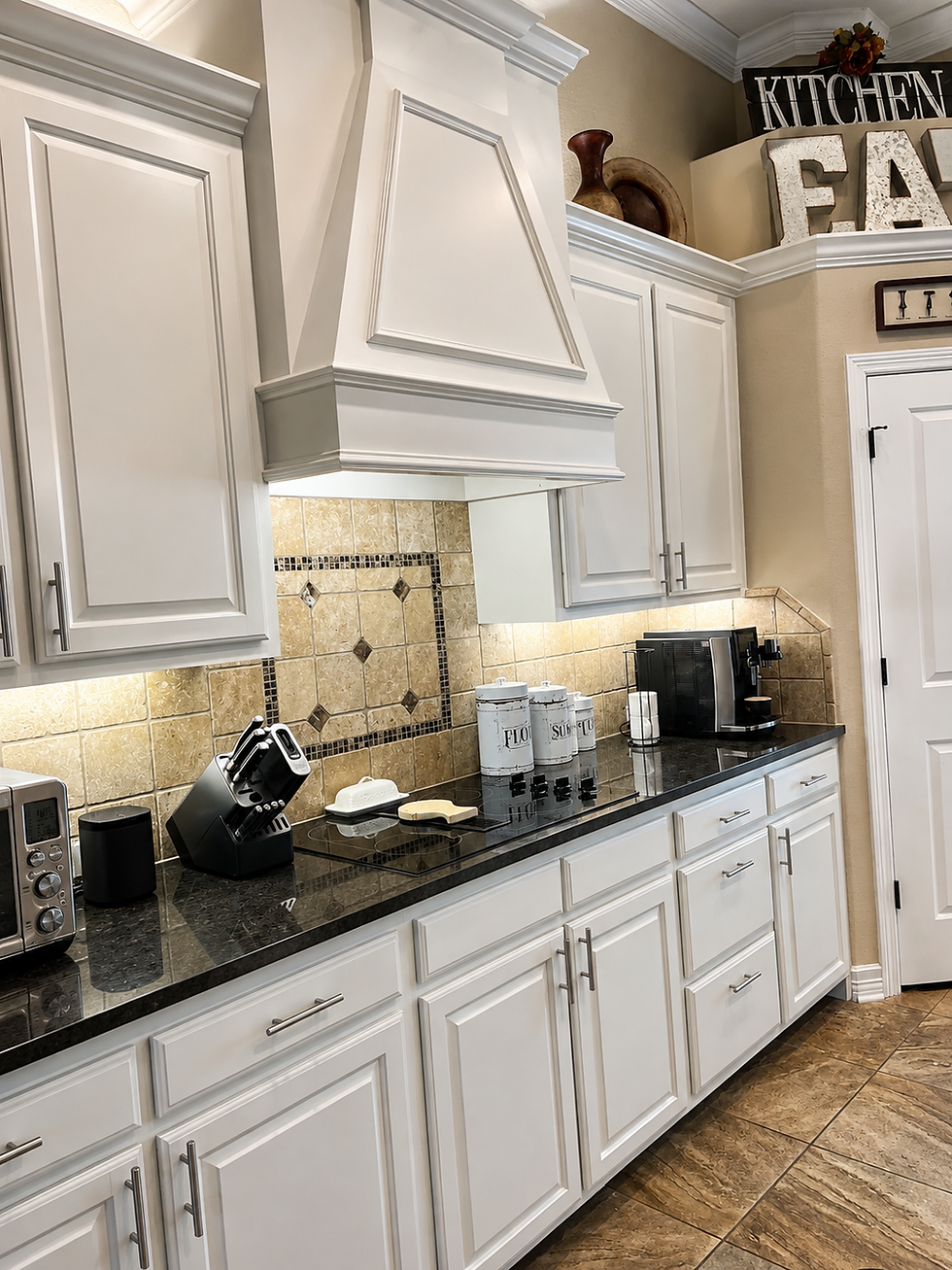
Cabinet painting is often the better fit when the cabinets are structurally sound but the homeowner wants a completely different look.
Dark stained cabinets, dated colors, or cabinetry that no longer fits the design of the room can often be transformed without replacing the cabinet boxes themselves.
Because the new finish is opaque, painting also provides much more freedom when choosing a color. Whites and warm neutrals remain popular, but homeowners can also use greens, blues, charcoal tones, and other colors to create a more customized kitchen.
The condition of the existing cabinets still matters. Loose or damaged components should be repaired, and not every surface or previous coating is equally suitable for painting. Proper preparation and product compatibility are critical to achieving a durable finish.
When Does Wood Refinishing Make More Sense?
Wood refinishing makes sense when the natural wood itself is part of what you want to keep.
This is especially relevant with cabinetry made from visually distinctive woods such as white oak. Instead of hiding the grain beneath an opaque coating, a refinishing system can preserve the texture, variation, and character that make the material unique.
The existing finish, wood species, previous coatings, and desired final tone all influence what is realistically achievable. Wood can also absorb stains and finishing products differently from one board to another, so natural variation should be expected rather than treated as a defect.
For homeowners who appreciate natural cabinetry, that variation is often part of the appeal.

Can Stained Cabinets Be Painted?
Yes. Many stained wood cabinets can be professionally painted, provided the existing surfaces are suitable and properly prepared.
The challenge is not simply covering the stain with paint. Cabinet surfaces can contain grease, residue, previous clear finishes, and wood tannins that may interfere with adhesion or bleed through the new finish.
That is why professional preparation typically includes thorough cleaning, sanding or surface preparation, and the use of an appropriate primer before the finish coats are applied.
When the cabinet structure is in good condition, painting stained cabinets can create a dramatic transformation while allowing homeowners to keep their existing cabinetry.
What About Cabinet Refacing?
Cabinet refacing is different from both painting and refinishing.
With refacing, the existing cabinet boxes generally remain in place, but the visible exterior surfaces are covered with new material and the doors and drawer fronts are typically replaced.
Painting and refinishing, on the other hand, work primarily with the cabinetry that is already there.
Understanding this distinction is important when comparing estimates because “painting,” “refinishing,” and “refacing” can describe very different scopes of work.
How Much Does Cabinet Painting Cost in Austin?
The cost of professional cabinet painting depends on factors such as the size of the kitchen, number of doors and drawers, cabinet condition, preparation requirements, and the complexity of the project.
As a general reference, professional cabinet painting projects in the Austin area can vary significantly depending on scope. Rather than treating cabinet painting as a simple price-per-door service, it is important to consider the complete preparation and finishing process.
We break down realistic price ranges and actual project examples in our Cabinet Painting Cost in Austin, TX — 2026 Price Guide.
How Long Does Cabinet Painting Take?
For many typical kitchen cabinet painting projects, our process takes approximately 4–5 working days, although larger or more complex projects may require additional time.
Preparation, drying and recoat requirements, cabinet configuration, and the condition of the existing finish can all affect the schedule.
For a detailed breakdown, see our guide: How Long Does It Take to Paint Kitchen Cabinets?
How Long Does a Professionally Painted Cabinet Finish Last?
Durability depends heavily on preparation, product selection, application, everyday use, and maintenance. There is no single lifespan that accurately applies to every kitchen.
We explain the factors that influence long-term performance in How Long Does Cabinet Painting Last? What Austin Homeowners Should Know.
Cabinet Painting & Wood Refinishing in Austin, TX
Choosing between cabinet painting and wood refinishing starts with understanding what you already have and what you want the finished kitchen to look like.
If you want a completely new color while keeping structurally sound cabinets, professional cabinet painting may be the right approach. If the natural wood grain is an important part of the design, a wood finishing or refinishing system may be more appropriate.
At SN Star Painting, we work with both painted cabinet finishes and natural wood finishing projects throughout the Austin area. Our recommendations are based on the existing cabinet material, condition, previous finish, and the result you want to achieve — not simply on applying the same system to every kitchen.
Not sure which finish is right for your cabinets? Contact SN Star Painting for a free estimate and project evaluation.
Frequently Asked Questions
Is cabinet painting the same as cabinet refinishing?
Not always. The terms are sometimes used interchangeably, but cabinet painting generally refers to applying an opaque colored finish, while wood refinishing may involve renewing or changing the existing finish while keeping the natural wood grain visible.
Is it better to paint or refinish kitchen cabinets?
It depends on the cabinets and the desired appearance. Painting offers greater freedom to completely change the color, while wood refinishing is better suited when preserving the natural grain and character of the wood is part of the design goal.
Can stained wood cabinets be painted?
Yes, many stained cabinets can be painted successfully when the existing surface is suitable and properly prepared. Cleaning, surface preparation, primer selection, and compatibility with the existing finish are important parts of the process.
Does cabinet painting require replacing the doors?
Usually not. If the existing doors and cabinet components are in good condition, professional cabinet painting can reuse them. Replacement may be appropriate when doors are damaged, deteriorated, or when the homeowner wants a different door style.
Is cabinet refacing the same as refinishing?
No. Refacing typically involves covering visible cabinet-box surfaces with new material and replacing doors and drawer fronts. Refinishing works with the existing cabinet surfaces and finish.


Comments